How ERP Improves Business Productivity: 10 Powerful Ways ERP Software Drives Growth and Efficiency
In today’s competitive business environment, organizations are constantly looking for ways to streamline operations, reduce costs, and improve overall productivity. As businesses grow, managing multiple departments using spreadsheets or disconnected software becomes increasingly difficult. Information gets scattered, communication gaps emerge, and manual processes slow down decision-making.
This is where an Enterprise Resource Planning (ERP) system becomes a game changer.
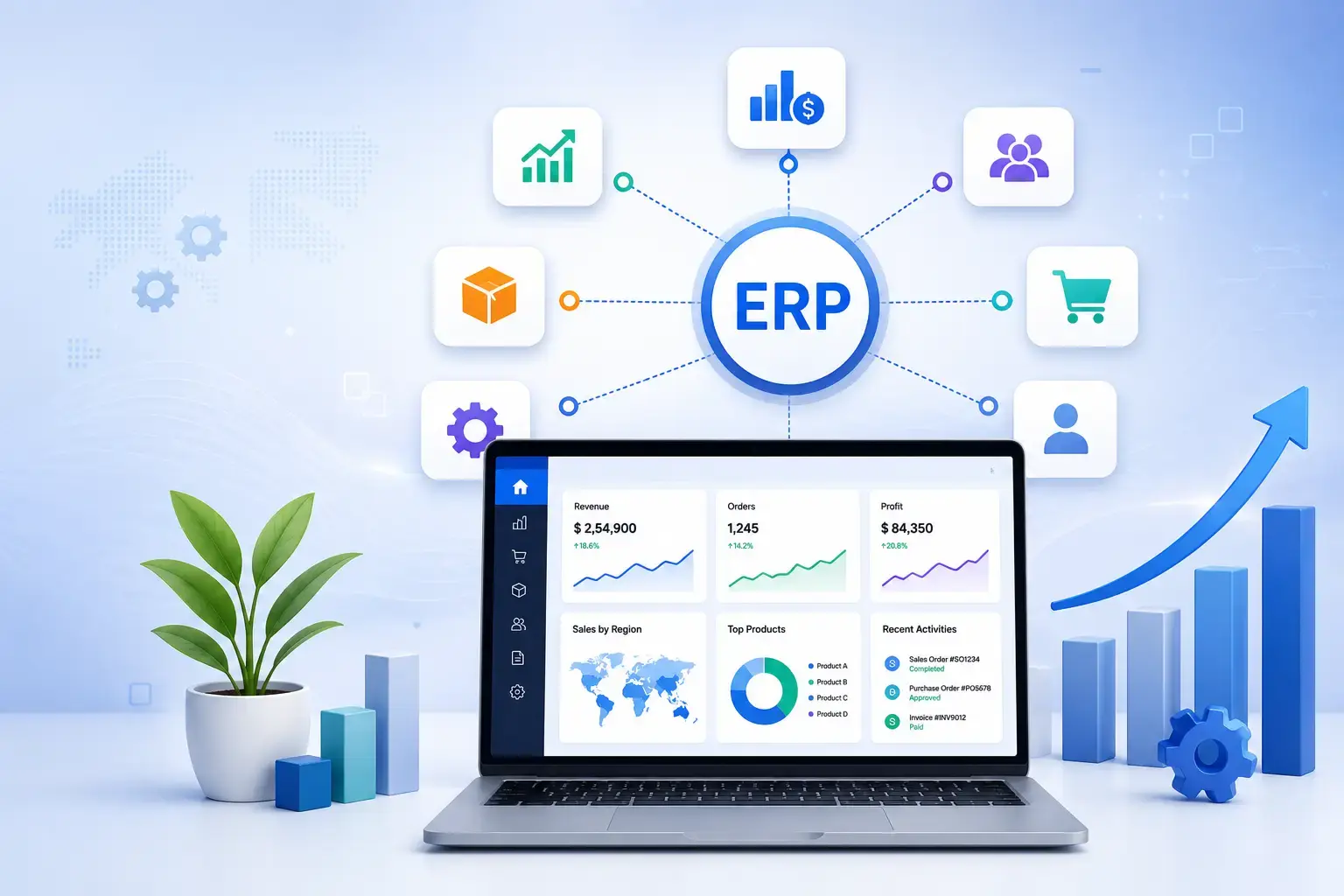
ERP software integrates all core business functions—including finance, sales, inventory, procurement, manufacturing, human resources, and customer relationship management—into a single centralized platform. By providing real-time visibility into business operations, ERP enables organizations to make faster decisions, automate repetitive tasks, and improve operational efficiency.
In this article, we’ll explore how ERP improves business productivity and why investing in the right ERP solution can significantly impact your company’s growth.
What is ERP?
1. Automates Repetitive Business Processes
One of the biggest productivity advantages of ERP software is automation.
Many organizations still rely on manual data entry, Excel spreadsheets, paper approvals, and repetitive administrative work. These tasks consume valuable employee time and often lead to human errors.
An ERP system automates processes such as:
- Invoice generation
- Purchase order creation
- Payroll processing
- Inventory updates
- Expense approvals
- Financial reporting
2. Centralizes Business Information
- Sales team uses CRM
- Accounts use accounting software
- Inventory team uses spreadsheets
- HR maintains separate databases
ERP integrates all these systems into one platform.
With centralized information, employees no longer waste time searching for data across multiple applications. Everyone works using the latest business information, improving collaboration and reducing communication gaps.
3. Enables Faster Decision-Making
- Sales performance
- Revenue reports
- Inventory levels
- Production status
- Customer orders
- Financial performance
- Employee productivity
4. Improves Inventory Management
Poor inventory management can result in:
- Overstocking
- Stock shortages
- Delayed deliveries
- Increased storage costs
ERP systems monitor inventory in real time.
Businesses can:
- Track stock movement
- Predict future demand
- Generate automatic purchase orders
- Monitor warehouse performance
5. Enhances Collaboration Across Departments
In many organizations, departments work independently.
Sales may promise delivery dates without consulting production.
Finance may not know pending purchase orders.
HR may lack visibility into project staffing requirements.
ERP connects every department through shared information.
This improves communication and ensures everyone works toward common business objectives.
6. Reduces Human Errors
- Duplicate records
- Incorrect invoices
- Financial discrepancies
- Inventory mismatches
Since ERP stores information in a centralized database, data is entered once and automatically updated across all departments.
This significantly reduces human errors while improving business accuracy.
7. Improves Customer Satisfaction
- Process orders quickly
- Track shipments
- Manage customer history
- Improve after-sales support
- Respond to customer inquiries faster
8. Increases Employee Productivity
- Customer engagement
- Business development
- Innovation
- Process improvements
- Strategic planning
9. Supports Business Growth
- Multiple branches
- Multiple warehouses
- Multiple currencies
- Multi-location inventory
- Multi-user collaboration
10. Strengthens Compliance and Security
- Role-based access control
- Audit trails
- Data encryption
- Automated backups
- Regulatory compliance reporting
Industries That Benefit from ERP
- Manufacturing
- Healthcare
- Retail and eCommerce
- Logistics and Supply Chain
- Construction
- Education
- Hospitality
- Professional Services
- Financial Services
- Distribution
Choosing the Right ERP Solution
- Your current business processes
- Required modules (Finance, HR, CRM, Inventory, Manufacturing, etc.)
- Scalability for future expansion
- Cloud vs On-Premise deployment
- Integration with existing software
- User-friendly interface
- Vendor support and maintenance
Conclusion
ERP software is much more than a business management tool—it’s a strategic investment that empowers organizations to work smarter, not harder. By automating repetitive tasks, centralizing data, improving collaboration, and providing real-time insights, ERP enables businesses to increase productivity, reduce operational costs, and make faster, more informed decisions.
Whether you’re a growing startup or an established enterprise, implementing the right ERP solution can help streamline operations, improve customer satisfaction, and create a strong foundation for sustainable growth. As digital transformation continues to reshape industries, businesses that embrace ERP technology will be better equipped to adapt, innovate, and stay ahead of the competition.
If you’re considering a custom ERP solution tailored to your unique business processes, partnering with an experienced development team can make all the difference. At Usability Designs, we specialize in designing and developing scalable ERP systems that improve efficiency, enhance user experience, and support long-term business success.
Call-to-Action
Looking to build a custom ERP solution for your business?
Usability Designs helps businesses streamline operations with scalable, user-friendly ERP systems tailored to their workflows. Whether you need modules for inventory, finance, HR, CRM, or manufacturing, our team can develop an ERP solution that boosts productivity and supports your growth.
Contact Usability Designs today to discuss your ERP development requirements and start your digital transformation journey.
Leave a Comment