ERP for Manufacturing Businesses: A Complete Guide to Improving Efficiency, Productivity, and Growth
The manufacturing industry is evolving rapidly, driven by increasing customer expectations, global competition, and the need for operational efficiency. Manufacturers today face numerous challenges, including rising production costs, supply chain disruptions, inventory inaccuracies, equipment downtime, and increasing compliance requirements. Managing these processes using spreadsheets or disconnected software systems often results in delays, errors, and reduced profitability.
This is where Enterprise Resource Planning (ERP) software becomes an essential business tool.
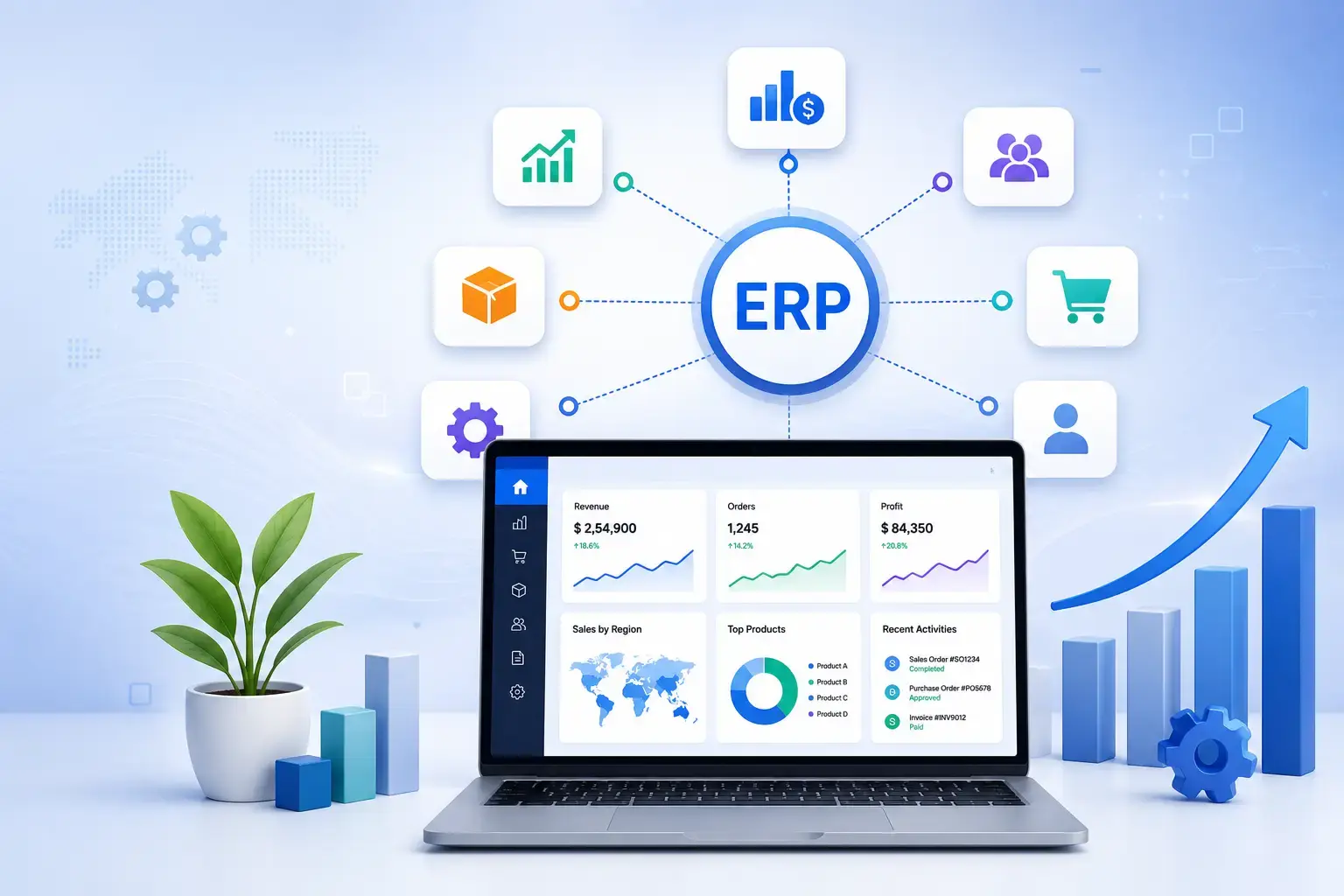
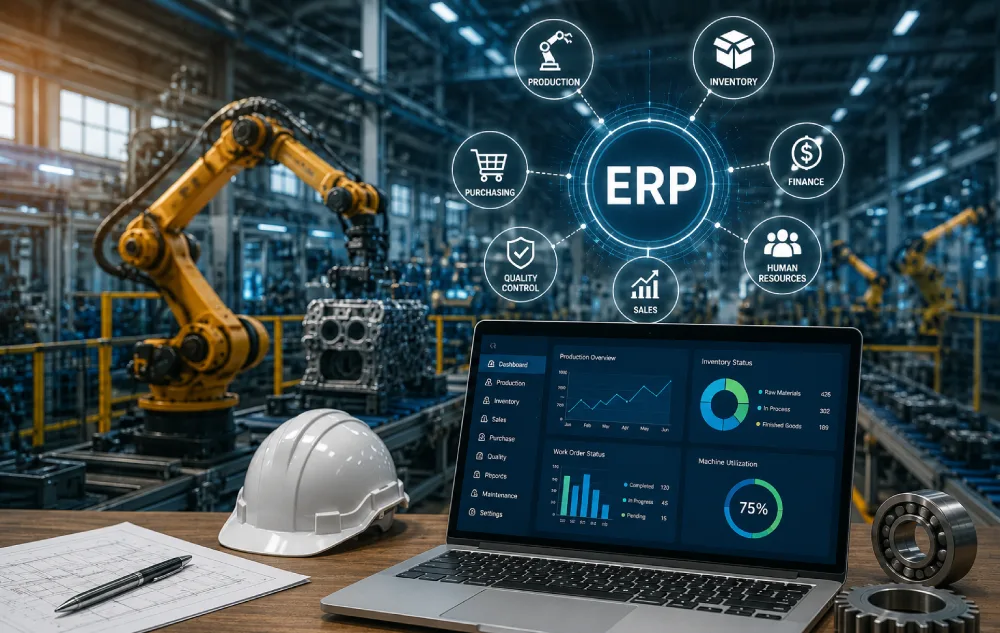
An ERP system integrates all critical manufacturing functions—such as production planning, inventory management, procurement, finance, sales, quality control, warehouse management, and human resources—into a single, centralized platform. By providing real-time visibility across the organization, ERP helps manufacturers streamline operations, improve productivity, reduce costs, and make smarter business decisions.
In this guide, we’ll explore why ERP is becoming indispensable for manufacturing businesses and how it helps companies build a more efficient and scalable operation.
What is Manufacturing ERP?
Manufacturing ERP is a specialized Enterprise Resource Planning solution designed to manage and automate manufacturing operations.
Unlike generic business management software, manufacturing ERP focuses on industry-specific processes, including:
- Production Planning
- Material Requirement Planning (MRP)
- Bill of Materials (BOM)
- Inventory Management
- Shop Floor Management
- Procurement
- Warehouse Operations
- Sales & Order Management
- Quality Control
- Financial Management
Instead of managing multiple software applications, manufacturers gain complete visibility through one integrated platform.
Common Challenges Faced by Manufacturing Businesses
- Poor production scheduling
- Excess inventory or stock shortages
- Delayed procurement
- Manual production tracking
- Equipment downtime
- Inaccurate demand forecasting
- Lack of real-time reporting
- Poor communication between departments
- High operational costs
- Compliance and quality management issues
Benefits of ERP for Manufacturing Businesses
1. Improved Production Planning
Efficient production planning is the backbone of successful manufacturing.
ERP software enables businesses to:
- Schedule production efficiently
- Allocate resources effectively
- Monitor production progress
- Balance workloads
- Reduce idle machine time
2. Better Inventory Management
Inventory is one of the largest investments for manufacturers.
ERP provides real-time inventory tracking, allowing businesses to:
- Monitor raw materials
- Track finished goods
- Reduce overstocking
- Prevent stock shortages
- Optimize warehouse utilization
3. Material Requirement Planning (MRP)
- What materials are required
- How much inventory is needed
- When materials should be ordered
- Expected production timelines
4. Bill of Materials (BOM) Management
- Track components
- Manage revisions
- Calculate production costs
- Maintain product consistency
5. Streamlined Procurement
- Tracking supplier performance
- Generating purchase orders automatically
- Managing vendor contracts
- Monitoring purchase approvals
- Reducing procurement delays
6. Real-Time Production Monitoring
- Machine utilization
- Production status
- Employee productivity
- Work order progress
- Production bottlenecks
7. Enhanced Quality Control
Product quality directly impacts customer satisfaction and brand reputation.
ERP systems help manufacturers maintain quality by:
- Recording inspection results
- Tracking defects
- Managing quality standards
- Automating quality audits
- Monitoring compliance
8. Supply Chain Optimization
Manufacturing success depends heavily on an efficient supply chain.
ERP software improves supply chain management by:
- Tracking supplier deliveries
- Forecasting demand
- Optimizing logistics
- Managing warehouse operations
- Improving vendor collaboration
9. Better Financial Management
- Monitor production costs
- Track profitability
- Generate financial reports
- Manage budgets
- Control operational expenses
10. Data-Driven Decision Making
- Production efficiency
- Inventory turnover
- Profit margins
- Sales trends
- Machine performance
- Customer demand
- Employee productivity
Key Features Every Manufacturing ERP Should Include
- Production Planning
- Material Requirement Planning (MRP)
- Bill of Materials (BOM)
- Inventory Management
- Procurement Management
- Warehouse Management
- Shop Floor Control
- Quality Management
- Asset & Equipment Management
- Sales & CRM Integration
- Financial Management
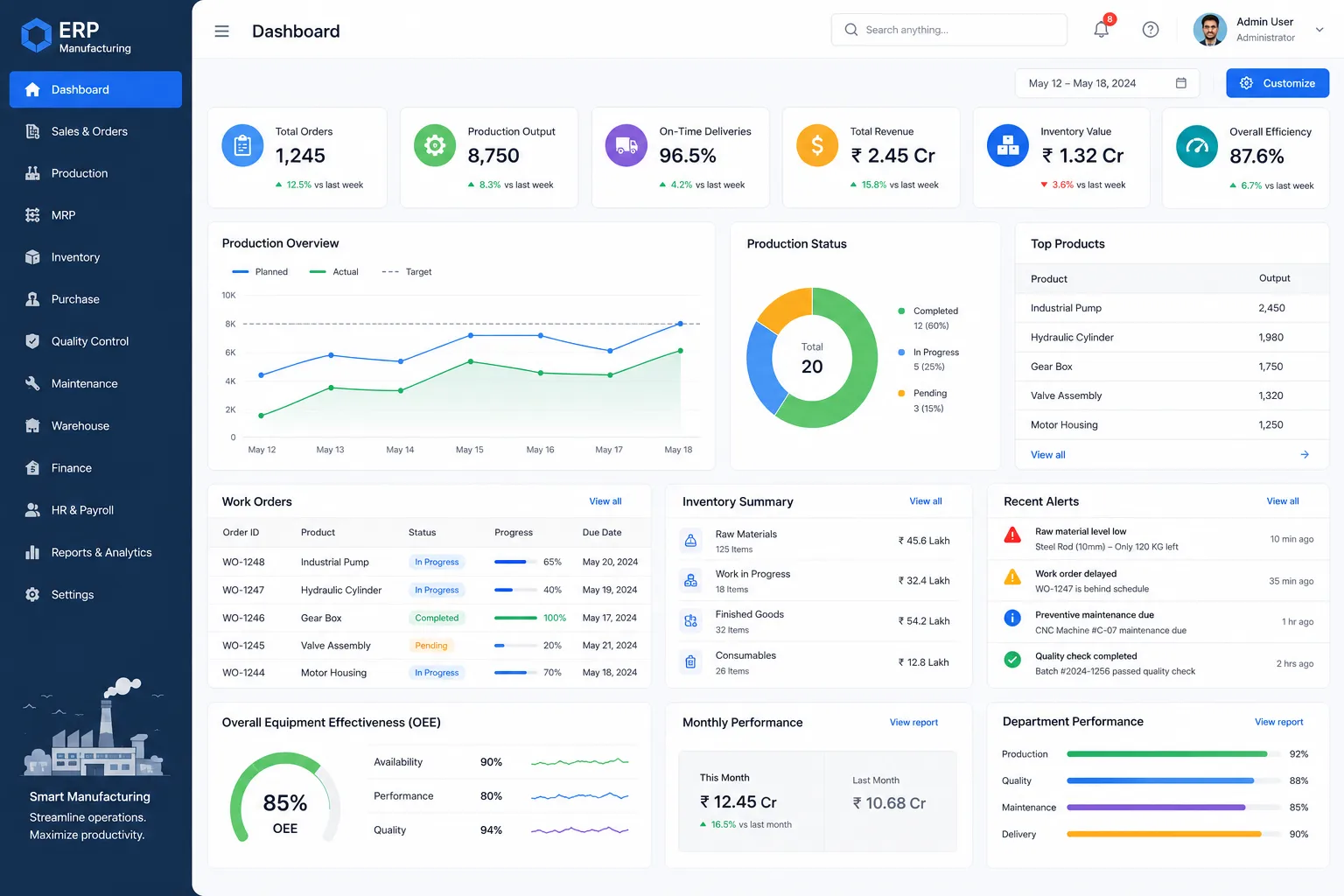
- Business Intelligence Dashboard
- Multi-Location Support
- Barcode & QR Code Integration
- Cloud Accessibility
Industries That Benefit from Manufacturing ERP
- Automotive
- Engineering
- Electronics
- Food & Beverage
- Pharmaceutical
- Textile & Apparel
- Plastic & Packaging
- Furniture Manufacturing
- Chemical Industries
- Machinery & Industrial Equipment
How to Choose the Right Manufacturing ERP
- Industry-specific functionality
- Scalability for future growth
- Cloud vs On-Premise deployment
- Ease of use
- Integration with existing systems
- Customization capabilities
- Mobile accessibility
- Reporting and analytics
- Vendor support and training
- Total cost of ownership
Conclusion
Manufacturing businesses operate in a fast-paced environment where efficiency, accuracy, and timely decision-making are essential for success. An ERP system brings together every critical business function—from production planning and inventory management to procurement, finance, quality control, and supply chain operations—into one unified platform.
By automating repetitive tasks, improving collaboration between departments, reducing production delays, and providing real-time business insights, ERP software empowers manufacturers to increase productivity while lowering operational costs. It also provides the scalability needed to support business growth, adapt to changing market demands, and remain competitive in an increasingly digital manufacturing landscape.
Whether you’re a small manufacturing company looking to modernize your operations or a large enterprise aiming to optimize complex production workflows, implementing the right ERP solution can significantly improve efficiency, profitability, and customer satisfaction.
Why Choose Usability Designs for Manufacturing ERP Development?
At Usability Designs, we specialize in designing and developing custom ERP solutions tailored to the unique requirements of manufacturing businesses. Our ERP systems are built with a strong focus on usability, automation, scalability, and seamless integration, enabling manufacturers to streamline operations and achieve sustainable growth.
From production planning and inventory management to procurement, finance, warehouse management, and business analytics, we develop ERP platforms that simplify complex manufacturing processes while delivering an intuitive user experience.
Ready to digitize your manufacturing operations? Contact Usability Designs today to build a powerful, scalable ERP solution that drives productivity, improves operational efficiency, and supports your long-term business growth.